


Cleaning & Pest Control
How Often Should You Deep Clean Different Areas of Your Home
Regular cleaning keeps a home tidy, but deep cleaning reaches what daily routines miss. Here's a realistic frequency guide, room by room.
Read articleCleaning & Pest Control
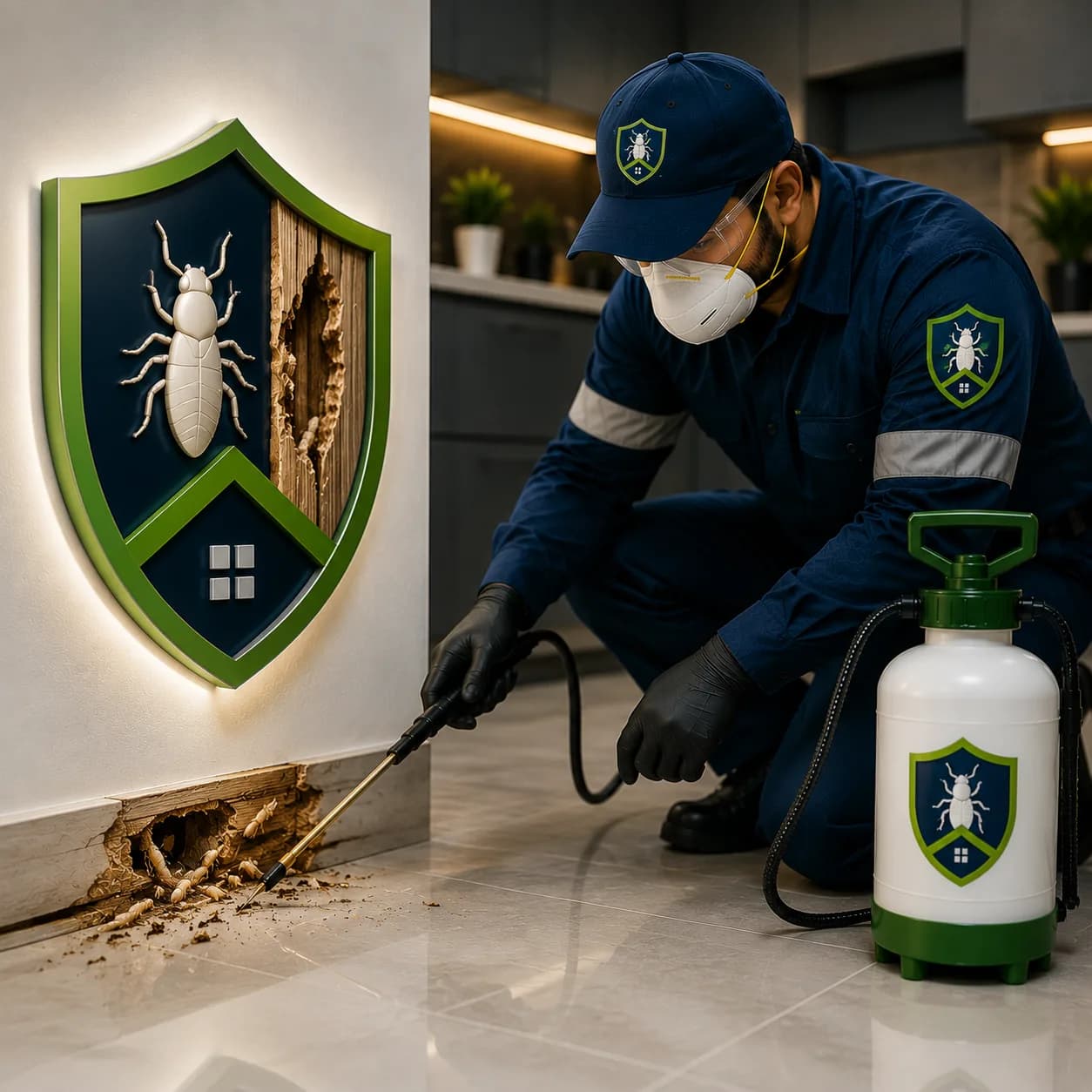
Of all household pests, termites are arguably the most dangerous — not because they're a nuisance, but because they can work silently for months, even years, inside your walls and woodwork before any real structural damage becomes visible. This guide covers how to catch an infestation early, and why DIY treatment simply isn't an option for this particular pest.
Termites feed on the cellulose found in wood, paper, and some building materials. In the UAE, where wooden elements are common in doors, window frames, interior fittings, and sometimes villa exteriors, an undetected infestation can cause significant cumulative damage over time. The core issue: termites typically work from the inside out — the exterior of a piece of wood can look completely intact while the interior is fully hollowed.
Many people confuse termites with regular ants when they spot small, pale insects. The key difference: regular ants rarely pose a structural risk, while termites (an entirely different insect family from true ants) actually feed on wood and can threaten a building's structural integrity if left untreated for a long period.
Catching termites early is the real difference between a simple fix and a major repair bill. The clearest signs:
Villas, due to their direct contact with soil and having more wooden elements (garden doors, pergolas, exterior fittings), are more exposed to subterranean termites — the most common and damaging type in the region. Upper-floor apartments are relatively less exposed, but ground-floor units and villas benefit from regular inspection.
Unlike most other household pests, termites aren't something a store-bought insecticide can handle. A colony can number in the thousands, working underground and inside walls, entirely out of reach of any surface treatment. A non-professional attempt might kill a limited number of visible individuals while the core colony continues its activity with no real impact — a fundamental difference from pests like cockroaches or regular ants.
This is exactly why professional pest control services aren't optional here — they're a genuine necessity.
A specialist inspects foundations, exposed and hidden woodwork, and the building's perimeter to determine whether an active colony exists.
Treatment approach varies by termite type and colony spread, making this step essential before any intervention.
The appropriate treatment is applied — whether a chemical barrier around the foundation or direct treatment of infestation points — using approved materials, focused on cutting the link between the colony and its access point.
Given how subterranean termite colonies can return from nearby colonies, regular follow-up inspection is recommended, especially for villas, even after successful treatment.
Yes, largely. A few habits reduce the risk:
How do I know my home has termites before visible damage appears?
Mud tubes, hollow-sounding wood, and discarded wings near windows are among the clearest early indicators — regular professional inspection is the surest way to catch it early.
Do termites affect concrete structures too, or only wood?
The concrete structure itself isn't directly damaged, but any wooden elements within the building (doors, window frames, fixed furniture, decor) remain at risk.
How long does termite treatment take?
It depends on infestation size and the treatment type required — the technician confirms the timeline after a direct inspection.
Is a termite inspection necessary when buying a used villa?
Strongly recommended — undetected damage can be costly to repair later, and early inspection is a relatively simple preventive step compared to that.
Does treatment guarantee the infestation won't return?
Professional treatment effectively addresses the current colony, but periodic monitoring afterward matters, especially in areas exposed to new colonies from the surrounding property.
Tell us what's going on and we'll follow up with a plan and a quote.
Cleaning & Pest Control
Regular cleaning keeps a home tidy, but deep cleaning reaches what daily routines miss. Here's a realistic frequency guide, room by room.
Read article
Cleaning & Pest Control
By the time pests are visible during the day, an infestation is often already established. These are the quieter signs worth watching for.
Read article
Cleaning & Pest Control
The two terms get used interchangeably, but they cover different work. Here's how to tell which one your home actually needs.
Read articleWe use a strictly necessary cookie to keep you signed in. With your permission, we may also use analytics cookies to understand how this site is used. See our Cookie Policy for details.